Back to All
Our Hires
Find out about our extensive hire services.
Tell Me More

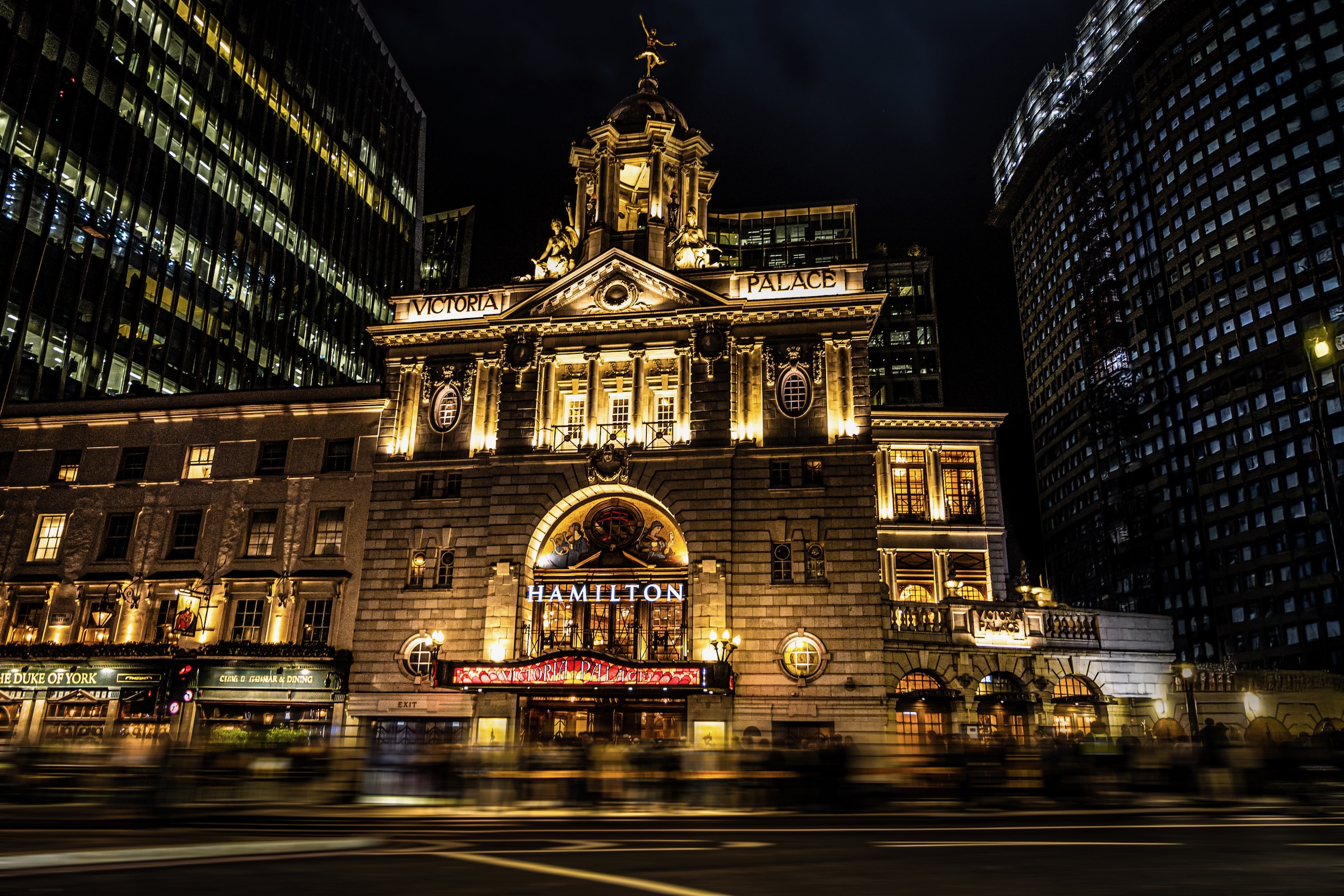
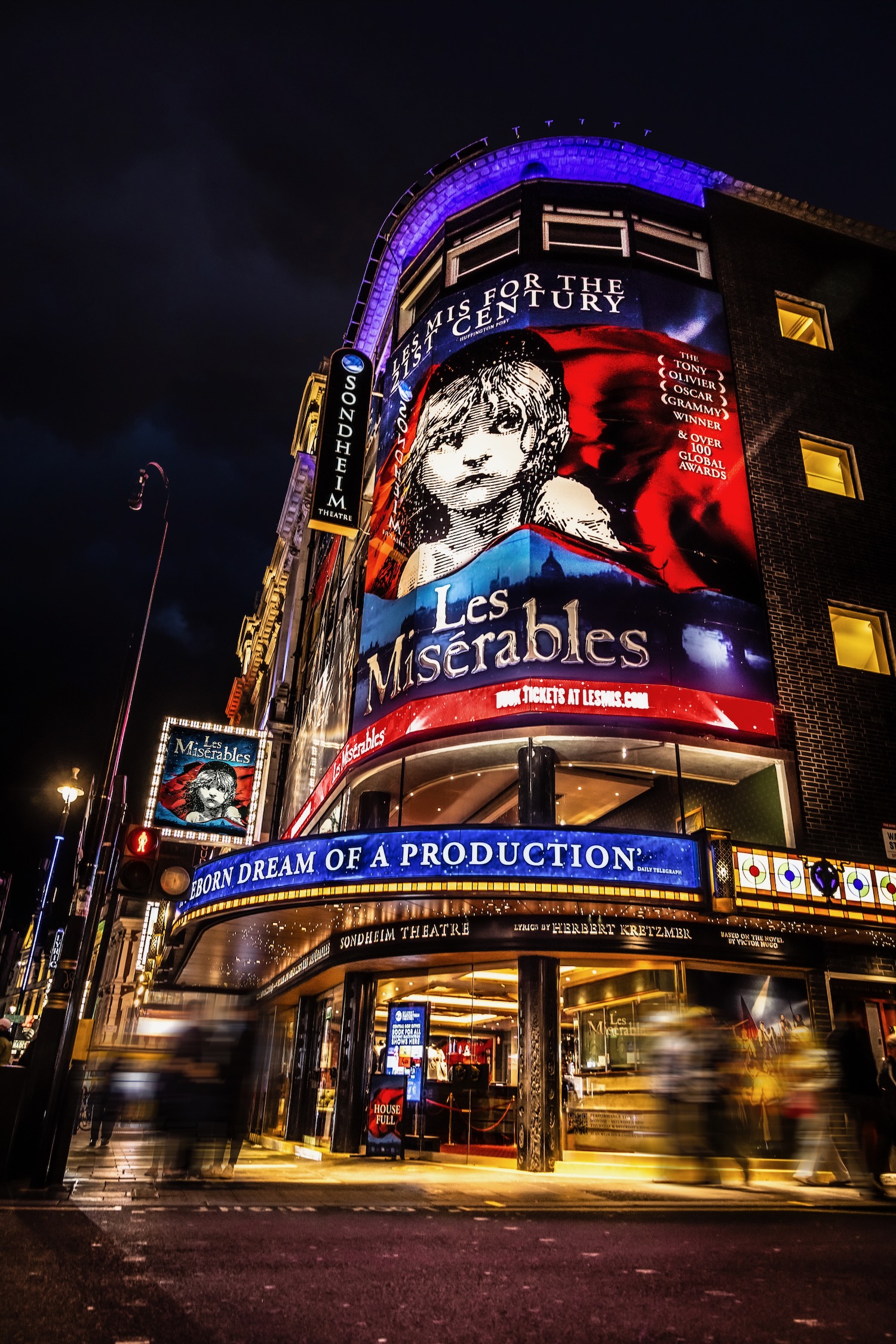
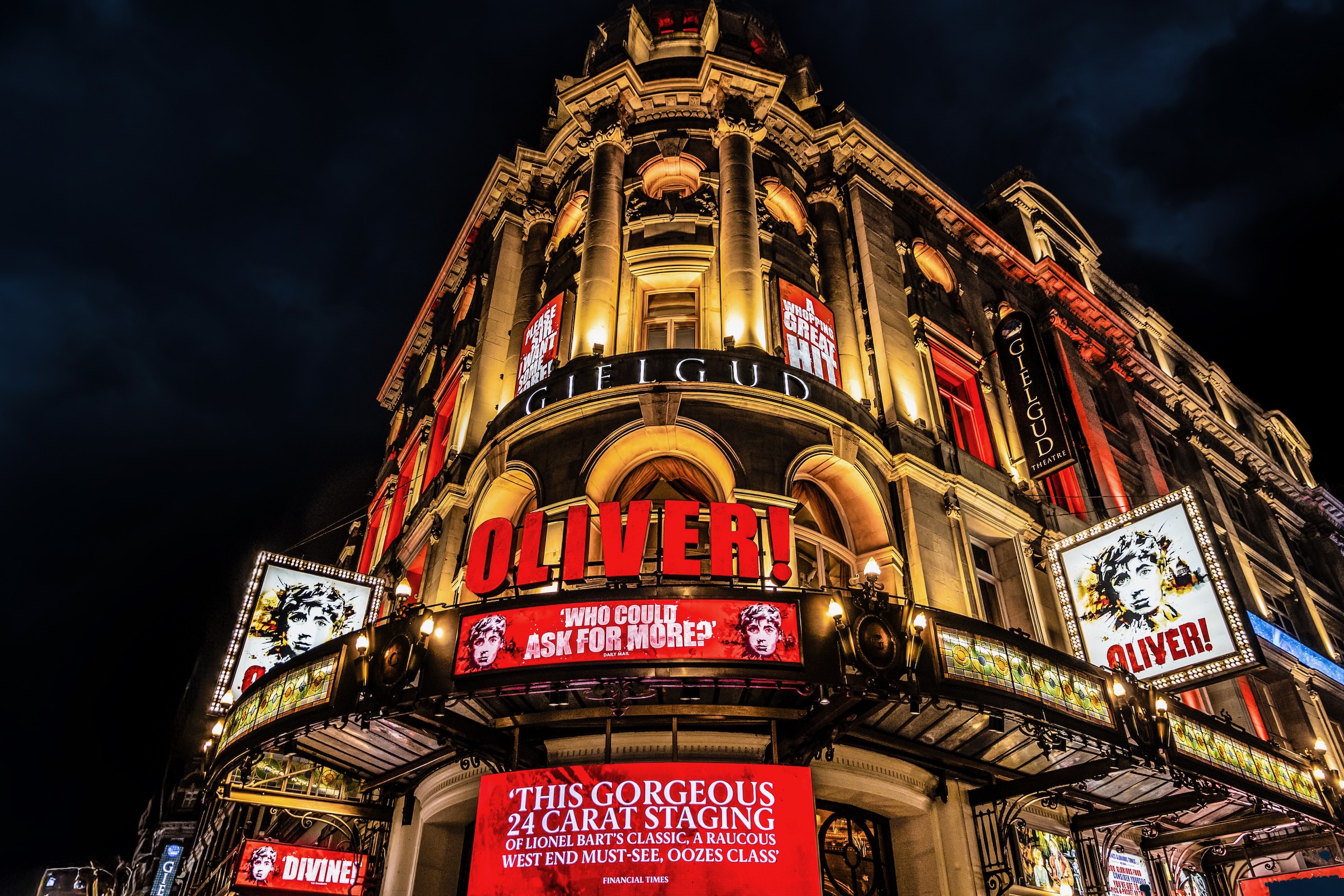
When Delfont Mackintosh Theatres (DMT) – owner of eight historic theatres in London’s West End (Prince Edward, Prince of Wales, Noel Coward, Gielgud, Novello, Wyndham’s, Victoria Palace and Sondheim) set out to find an improved and future-proofed solution for its audiences’ assistive listening needs, its first call was to the London-based source of sound expertise, Autograph.
“Autograph was the natural choice,” says DMT’s Technical Director, Andy Beardmore. “We’ve collaborated with them on many projects over the years, so we have a very close connection. To begin with, I asked about improving our assistive listening system – ‘What’s the next step?’”
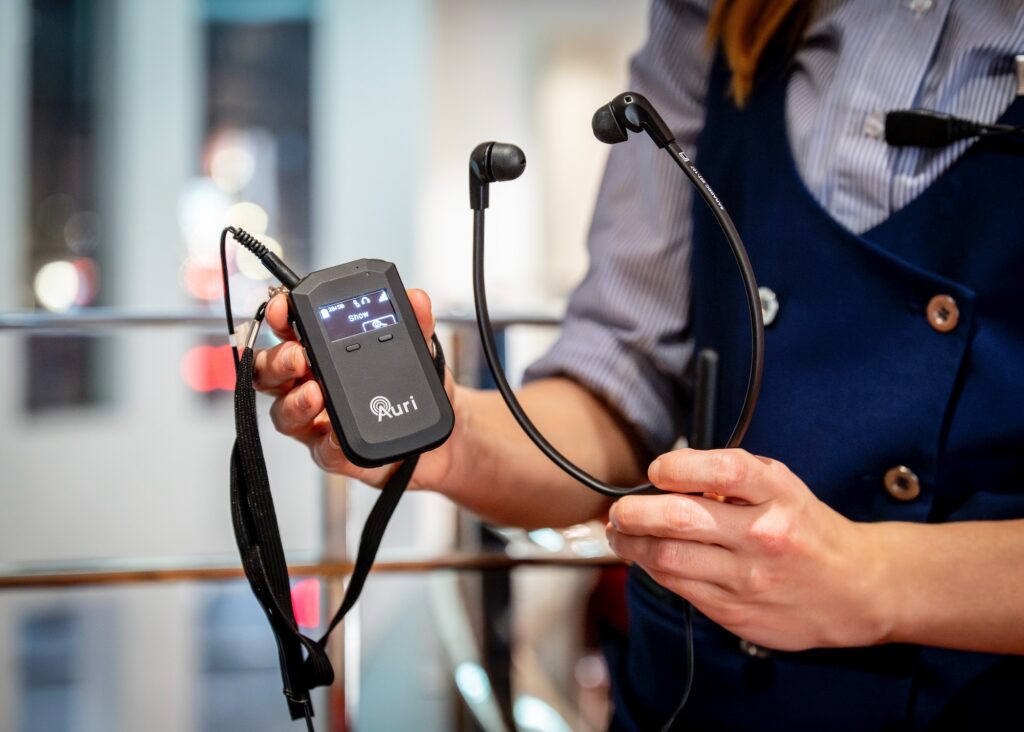
Autograph provides Auracast for Delfont Mackintosh Theatres
(photo: David Jensen)
After assessing several options, Autograph decided the next step was a recently-launched solution from Ampetronic. Designed specifically for professional use, Auri™ uses Auracast™ broadcast audio, part of Bluetooth® LE Audio, which enables the broadcast of wireless LE (Low Energy) Audio signals to multiple devices without Bluetooth’s usual need for device pairing.
Autograph’s Technical Design Engineer, David Prosser, says, “Knowing DMT’s theatres as we do, and their focus on customer experience, Auri’s potential stood out. However, before committing to it, we needed to be sure that it was the right solution. So, prior to on-site trials with DMT, we tested a demo unit in our warehouse, putting it through the rigours that could be expected in daily use and measuring its performance to make sure it was up to scratch.”
Once all parties were satisfied, Autograph’s team carried out the bulk of the installation work – a total of 21 transmitters across eight venues – in just four-weeks, completing in October 2025. Amid the theatres’ busy schedules, progress was made wherever and whenever possible.
With capacities ranging from 800 to more that 1,700, each theatre demanded detailed individual attention. “All the venues are very different, so it wasn’t straightforward,” says Beardmore. “It took several site visits to find the best locations, so transmitters would blend into the fabric of the building without standing out; we wanted solutions that gave the best results when it came to coverage, but at the same time were discreet.”
In this regard, Auri offers another benefit. “IR systems tend to be quite obtrusive,” says Prosser, “but the Auri transmitters are mostly hidden away, tucked behind drapes and pelmets where possible. So we’ve actually reduced the amount of visible technology, but without blocking the signal, of course, because it’s Bluetooth.”
DMT’s previous systems were infrared (IR), which rely on ‘line-of-sight’ and use several infrared radiators, positioned in prominent positions (proscenium arch, balcony front, side walls etc). Not only was coverage incomplete and prone to interference, but management of the service was demanding, with patrons requiring assistive listening required to sit in specific areas of the theatre.
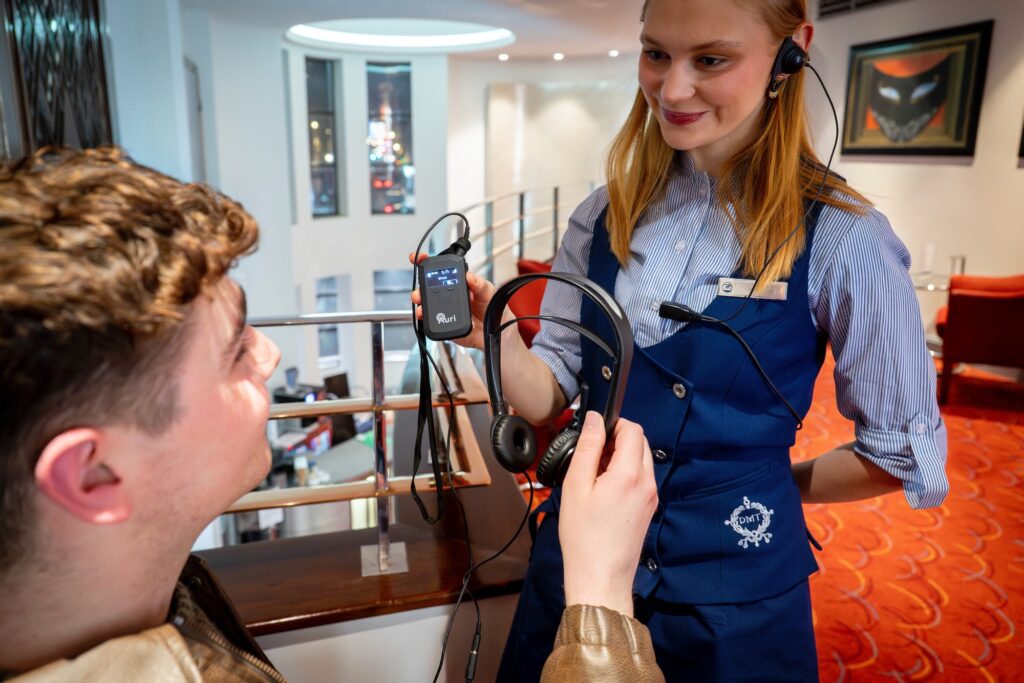
(photo: David Jensen)
Prosser says, “Because Auracast is a purely digital system, the sound quality is far better, and latency is imperceptible. There’s much less noise floor, so you don’t get the hiss or crackle you get with IR systems if someone moves in front of you or if you pass your hand across the receiver. What’s more, there’s a big improvement in consistency. Once you’re connected, the experience is the same for everyone, wherever they’re seated.”
“For us, it’s about delivering a great customer experience,” says Beardmore, “and this is a big step forward in several ways. The improvement in coverage is a major plus, but it also smooths our delivery of the service. Patrons can turn up on the day, say they’d like listening assistance, and we can provide it – wherever they sit. What’s more, as technology advances, more devices will also become Auracast-enabled, smoothing the process even further.”
Prosser agrees, “The future-proofing element was key. Currently, because it’s so new, the default offering is the small RX1 receiver unit. But as more devices – hearing aids, headphones, ear-buds – have Auracast built-in, there will be less call for them. But, by encompassing both options, the system covers a wider demographic. Those with their own hearing devices can use them, while those without their own, or those less comfortable with them, can use the preset receiver.”
Although launched as recently as January 2025, this landmark upgrade for DMT is the first adoption of Auri by a multi-venue operator.
Auri’s discreet TX2N transmitter includes professional features such as AV inputs, PoE/USB powering and optional Dante audio-over-IP integration. D4 and D16 docking stations look after charging and management for 4 or 16 RX1 receivers respectively, and also offer centralized configuration and firmware updates via the free Auri Manager software. Because the system is largely ‘set and forget’, there is minimal need for in-house staff training.
Ampetronic’s Marco Leiria says, “We are delighted with Autograph’s successful implementation of Auri throughout DMT’s impressive portfolio of West End theatres. Top-end entertainment spaces like these are an important focus for us, and we look forward to working more with Autograph and its clients.”
Summarising, Prosser says, “Auri gives us the professional AV-grade infrastructure that public spaces like theatres really need to deliver Auracast services. We’re very pleased that the results have proved so positive for DMT, and we look forward to providing similar solutions in the future.”
Find out more about Ampetronic’s Auri system:
Gallery:
Some of Delfont Mackintosh Theatres (DMT)’s iconic venues in the West End
(Click to enlarge):